Melilla’s Creatures
We believe that tourism can be a force for good. Tourists speaking out can help change the cities they visit for the better. This is why Melilla.travel has launched the Melilla’s Creatures campaign.
In 2010, Melilla’s city council officially recognised a holiday celebrating the ritualistic killing of animals, known in Arabic as Eid al-Adha. The decision was a huge step backwards for the treatment of animals, as well as for Melilla’s reputation.
The Melilla’s Creatures campaign invites prospective tourists to push Melilla’s councillors to reconsider their mistake for the sake of the animals and for the city as a whole. This is not a campaign about eating—or not eating—meat. Nor is it about the festivities of any particular group; there is no place for ritual animal sacrifice whether it is done by Muslims, Hindus, occultists, or anyone else, whatever their background.
The Melilla’s Creatures campaign is simply about reminding people that a ritual of animal sacrifice has no place in a modern city.

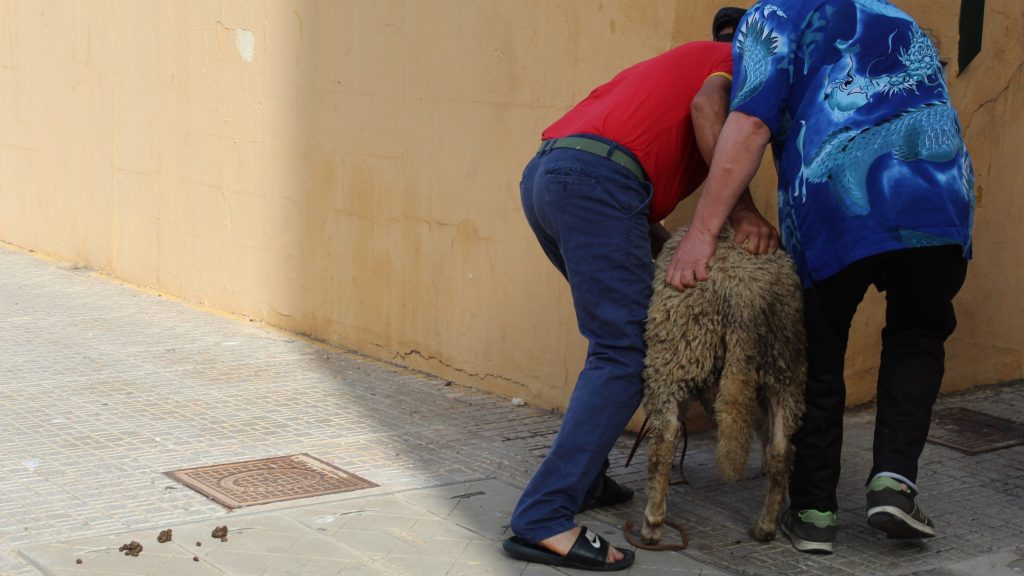
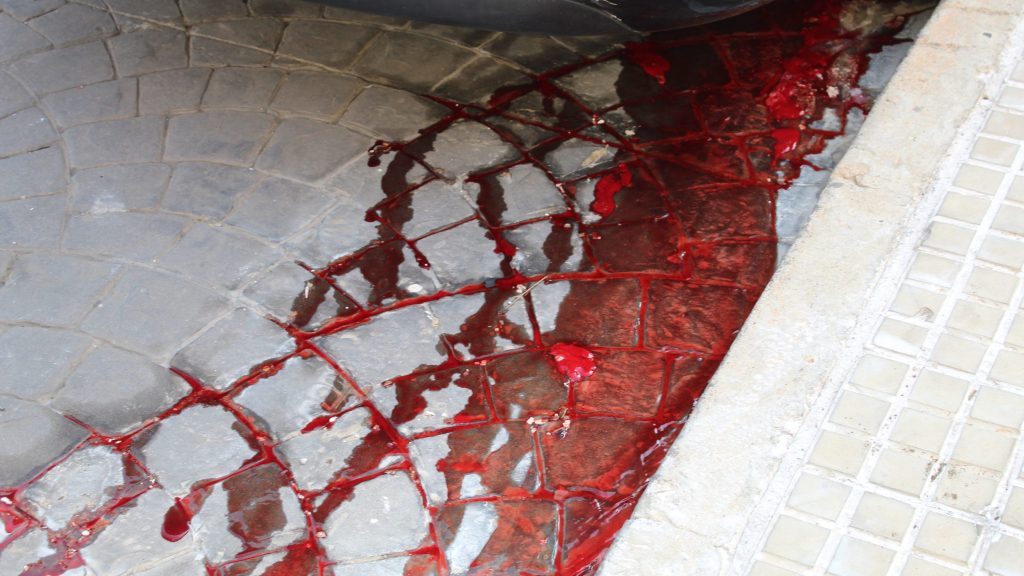
What can you do to help stop this animal abuse?
There are two main things you can do, depending on where you are located.
If you are from the EU, email your local MEP. Tell them that you object to the fact that an EU city has officially recognised a holiday celebrating the ritualistic sacrifice of animals. To save time, feel free to copy and paste the following message:
Animals are not objects to be ritualistically sacrificed, and official recognition for a holiday which celebrates ritual animal sacrifice (whether Eid al-Adha or any other) has no place in a society which is civilised. For years, there has been consistent progress in improving the treatment of animals within the EU, but Melilla's 2010 decision is a huge step backwards. I urge you to work behind the scenes to withhold or reduce any funding for Melilla that could potentially be used in the service of a holiday that celebrates the ritualistic killing of animals. Those who fund, promote, or defend the mistreatment of animals, especially their ritualistic sacrifice, will undoubtedly be judged harshly by future generations.
Wherever you reside, talk to your family and friends about this issue. Animal sacrifice rituals are an often ignored aspect of the efforts to improve animal rights, especially when compared to issues such as cosmetics testing or circuses. The more awareness that exists around ritual animal sacrifice—in Melilla or elsewhere—the more it can be highlighted as a matter of serious concern. If you want to learn more so you can better inform people about this issue, there is additional information available below.
“I only want to protect animals from barbarous, cruel, inhuman and backward rituals.”
Brigitte Bardot
Animal rights campaigner, award-winning actress, and recipient of the Légion d’honneur
More information on the ritual animal sacrifice issue
What is the ritual animal sacrifice abolition movement?
The ritual animal sacrifice abolition movement is a loose term used to describe a broad grassroots campaign of individuals, NGOs, and media outlets. It aims for an end to ritualistic animal sacrifice as a practice by seeing it become legally prohibited and socially unacceptable in all jurisdictions.
What is Eid al-Adha and why is it an example of animal abuse?
Eid al-Adha is an annual event where Muslims (including Sunni Muslims, Shia Muslims, Ibadi Muslims, and their numerous jurisprudential divisions) engage in the ritualistic killing of goats, lambs, and other animals. The ritualised killing is usually performed as a group act, often in the presence of children. Eid al-Adha clearly meets the criteria for animal abuse because it involves forcibly corralling an animal, pinning it to the ground to restrain it, and slicing into the animal’s neck to drain it of its blood—all of which is done while the animal remains fully conscious. Eid al-Adha is known to be celebrated by Muslims situated in Melilla.
What is the Gadhimai festival and why is it an example of animal abuse?
The Gadhimai festival is an event where Hindus engage in the ritualistic killing of goats, buffaloes, and other animals. The ritualised killing is centred around a Nepalese temple near the border between Nepal and India and takes place every few years. The Gadhimai festival meets the criteria for animal abuse because the process involves the killing of a large number of animals as a form of public spectacle in an unnecessary act of mass violence. Gadhimai is not known to be celebrated by the Hindus resident in Melilla.
Why does a Spanish city like Melilla celebrate a holiday based around ritual animal sacrifice?
Eid al-Adha is typically celebrated in places lacking basic human and animal rights such as Saudi Arabia, the Sudan, the Islamic Republic of Iran, Somalia, and Taliban Afghanistan. It is therefore highly unusual that Melilla’s councillors would want to add their city to such a list. One possible explanation is that many on Melilla’s city council may not be aware of the negative perception a festivity of ritual animal sacrifice has outside of Melilla and how off-putting it is to prospective tourists from developed societies. Those who have grown up around Eid al-Adha may be especially oblivious to the fact that ritualistic animal sacrifice is not considered a practice of a modern, civilised society.
Is it realistic to expect the end of ritual animal sacrifice?
Societies can certainly learn to let go of barbaric practices, no matter how deeply entrenched they are. Slavery is a prime example of this. The slave trade did take a long time for some people to abolish; France’s King Louis X issued an abolition decree for metropolitan France in 1315 while Mauritania’s President Mohamed Khouna Ould Haidalla only outlawed slavery by decree in 1981. Abolition therefore took a while to catch on in some places, but today slavery is legally prohibited in all jurisdictions. There is no credible reason why ritual animal sacrifice cannot similarly be abolished. Just like slavery though, it will require the courage of everyone—both politicians and citizens— to stand up for what is right and to reject practices which are backward and cruel. Of course, those who continue to defend ritual animal sacrifice will undoubtedly be viewed negatively by later generations, just as those who proudly defended slavery in the past few centuries are viewed today.
Where can more information be found on organisations combatting ritual animal sacrifice?
Celebrated animal rights campaigner and Legion d’honneur recipient Brigitte Bardot has repeatedly campaigned against various forms of animal abuse, including Eid al-Adha specifically, as well as other instances of ritual animal sacrifice. More information on her French animal rights charity can be found here. Animal Equality also has campaigned against animal abuse in ritual animal sacrifice and more information on this organisation can be found here (or for their Spanish branch, Igualdad Animal, here).